BIO GROUP · Bulk, retail and private label
Pinus koraiensis 650 | Korean Pine Nuts
Pinus koraiensis 650 count. Bulk, retail and private label. Confirmed in the quotation and lot specification.
Product specification
| Botanical species | Pinus koraiensis |
| Kernel size | 650 count |
| Bulk packaging | Confirmed in the quotation and lot specification. |
| Origin | China |
Average nutritional values per 100 g
| Energy | 2,953 kJ / 705 kcal |
| Fat | 68.4 g |
| of which saturates | 4.9 g |
| Carbohydrate | 9.4 g |
| of which sugars | 3.6 g |
| Fibre | 3.7 g |
| Protein | 13.7 g |
| Salt | 0.005 g |
Indicative reference averages for dried pine nut kernels, not species-specific or batch-specific analysis. Natural values vary by species, origin and harvest.
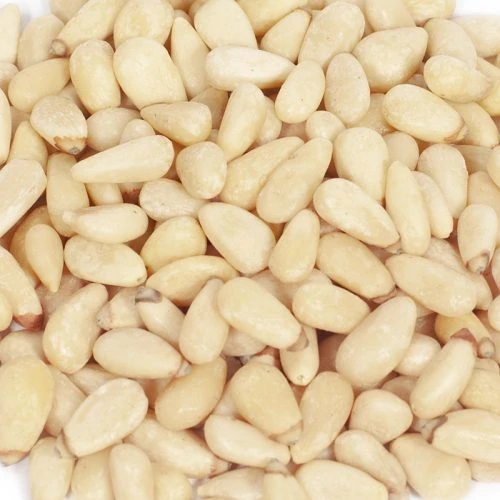
Pinus koraiensis, commonly known as Korean pine, grows naturally in northeastern China, the Korean Peninsula, Japan and other parts of northeastern Asia.
Korean pine nuts have been part of everyday cooking in Korea and China for centuries. Traditionally, people ate them whole, added them to different dishes or pressed them to make pine nut oil.
What makes Korean pine nuts stand out is their size. The kernels are larger than those of most other pine nut varieties, with a long, slightly pointed shape and a pale ivory colour. They have a rich, nutty taste and a creamy texture. Compared to Pinus sibirica, the kernels are noticeably bigger, which also makes them more visible in finished food products.
Today, Korean pine nuts are used in everything from traditional Asian dishes to pesto, sauces, baked goods and confectionery.
At Bio Group, we supply Pinus koraiensis 650 pine nut kernels to food manufacturers, wholesalers and distributors throughout Europe. Our main source is China, with quantities and availability depending on the current supply.
Discuss your requirements
Tell us the product, quantity, packaging and delivery location you require.